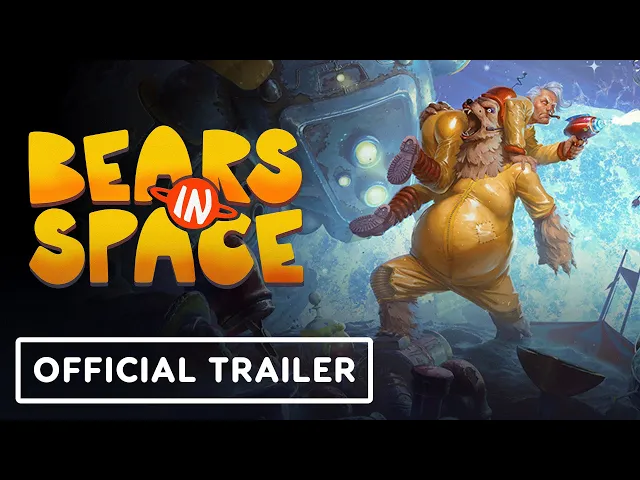
Ded-Dive: Bears in Space
[No. 001]
Got in touch with the developers behind a boomer shoot-em-up called Bears in Space
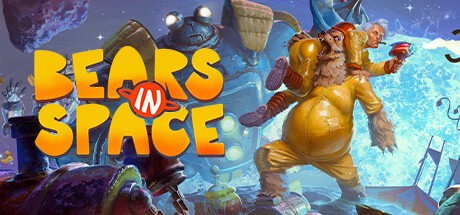
A Ded-Dive: Bears in Space (Broadside Games)
Recently, I got in touch with the mad lads behind a boomer shoot-em'-up title called Bears in Space. I had seen clips of their game surfacing in indie forums and Discords around 2018, so it was a surprise to find out that this studio had shipped their title over 6 years later in 2024!
A bit of background about Broadside Games, they are a small studio based out of Ipswich Australia, and I mean small with a capital S. Between themselves, they essentially bootstrapped their first ever title to the market, gaining the attention and eventual funding of a major publisher along the way. Bears in Space was the proving grounds for their core team, so the success of it is intended to serve as a platform in which to launch more of their projects from in the future. With that in mind, it’s evident from beginning to end that this introductory game of theirs was developed with a level of care and intimacy that just can’t be denied.
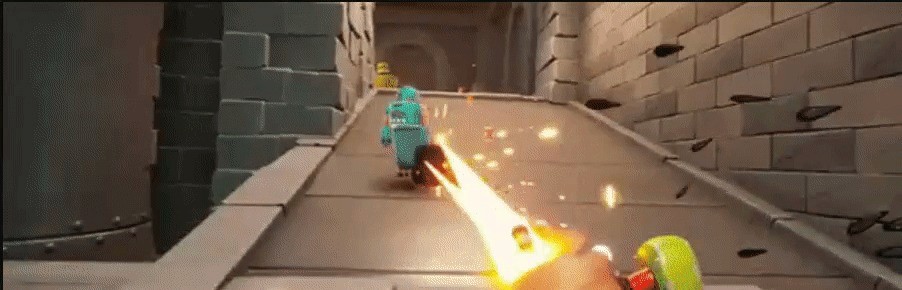 |
Shoot-em'-up bullet mania action as seen in Bears in Space |
Bears in Space brings the best parts of classic bullet-hell shooter games and combines those elements into a story format, filled with a childlike sense of comedy and outrageous dialog throughout. After speaking with John and Garth, two of the three core band members at Broadside games, I’m now thinking they have been steadily drip fed a powerful concoction of brain rotting cartoons most of their upbringing, and maybe their adult life too. They are awesome guys to chat with. It’s hard to describe, but the game has a sort of likeness to their own personalities, which made it easy to sit back and listen to them describe this beautiful-ugly child of theirs.
We spoke about the early days of Bears in Space, touching on some really valuable information regarding their interactions with publishers, as well as some of the details concerning shortfalls experienced in marketing. While this article serves as a sort of post-mortem to the game, I think that the developers at Broadside Games provide a really clear voice to hear about some of the nuances involved in bootstrapping a game, seeking and working with a publisher, and managing technical development along the way.
They are a reminder to us first time developers that the impossible can be made possible. It’s just a bonus that they happened to develop in Unreal Engine and primarily with the use of Blueprints scripting too! That’s right, for all you spaghetti cowboys working in Unreal, this is one you especially don’t want to miss.
Hearing from their first-hand experiences, we can begin to build a picture of just what it takes to bring a team of unproven developers and artists to the finish line with limited resources. Without further yapping, let’s hand the mic over to Garth and John from Broadside Games.
How did Bears in Space begin, and what was the team up to before starting on development?
GARTH:
"When we first met each other, we used to hang out on the weekends. We'd go to his place after work and would write skits to film for YouTube. Did a bit of that for a while. We had written something called Bears in Space as a skit, but it never turned out as one, but it did eventually turn into our game. John was the first to get into the gaming industry, he started off working at Defiant."
JOHN:
"Yeah I started out as a prop artist, then I was doing some map and environment art. When Defiant ended up closing down, we moved onto The Forgotten City, the standalone game based on the Skyrim mod. While I was working on that we were hammering away on Bears in Space still in the background. Once we got some funding for the project for real, it was right when Forgotten City was being wrapped up so it sort of worked out nicely. We had received two grants, which really helped us out, but it wasn't enough to allow us to quit our jobs and work on the project full-time yet. It wasn't until we signed with our publisher that we were actually able to dedicate our time fully, with the project going full steam ahead. We could then actually bring on more people and start hiring outside help"
How big of a team worked together to ship Bears in Space?
JOHN:
"We had a core team of three, which was Garth and I as well as Dan, who did the sound effects and music, but he also worked on some junior coding. Everyone sort of had to wear a lot of hats on the team. On Bears in Space, we were up to maybe 12 total with contractors, to include help we brought in for QA, UI, and some visual effects. In between projects however, you have to get super lean again. That's where we are back at again today with the core team, working on our next project, Chunk."
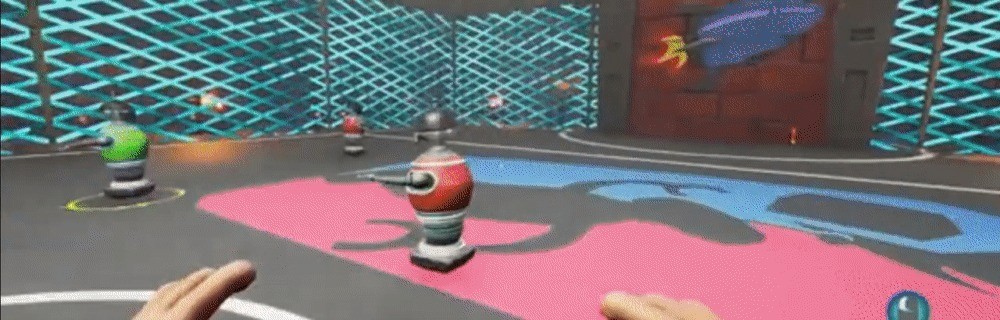 |
In game street rules Basket Cube gameplay |
Why did you decide to ship a full title using blueprint visual scripting in Unreal Engine?
Garth:
"It's super easy for starters. When I first started learning game development, I had used a lot of Unity early on, but John had eventually convinced me to jump ship to Unreal. I think that everything looks nicer, but I think with less set up than what was required at the time in the Unity engine. It was really artistically advantageous to us to have access to the blueprint scripting because, as mentioned, we all wear some of the same hats. You can knock something out as a prototype incredibly quickly, and at a bare bones, it works. It may not be as efficient, and C++ has the upper hand here with the ability to build systems for longevity, but blueprint still works just as well for our purposes. I was able to do all the animating in the game, as well as the UI setup, so it made it all possible for us. We'll be doing the same for our next title as well."
JOHN:
"It's sort of like a universal language for everyone on the team. I'd say, for example, if you are an artist who works with materials, you can probably jump into blueprints and track out how things flow, and I like how everything is similar. I know it's all different systems, but you start to understand how they work, so the learning bridge is small. Touching on how Garth said things looked better in Unreal, I absolutely think everything "out of the box" works and looks nice in Unreal, whereas Unity had been limited in this area. It was required in Unity that you'd had to develop a bunch of shader stuff just to get it looking proper, but I felt that when we used Unreal, we were able to skip whole months of development because the material system is powerful. This may have changed by now, and I think around when we started on Bears, Unity was just getting started with their PBR system, so it wasn't as desirable of an alternative."
How did you mitigate any problems in performance when working in Unreal Engine?
GARTH:
"The biggest performance breakthrough I had came from the way we handled projectiles. Because Bears is like a bullet-hell style game, there's a lot of these flying around at one time. Initially, we were using pooled actors, but I eventually switched that all out for a Niagara based solution. It was sort of unconventional, but it worked for our needs and ended up doubling fps. The classic advice I can offer to other blueprint devs would be to try and avoid relying too heavily on tick events and look into using timers instead. At a high level, I just aimed to keep the systems as simple as possible to reduce the overhead. It was definitely a struggle for a while there, but we got it figured out."
JOHN:
"When I first started out, more than the blueprints, I was concerned about the models and performance cost to be saved there. In the beginning, we were locked into something that I'd created years and years ago. It's hard, but to avoid that artist's curse, you've got to just continue on with what you set out with initially in style. We did tweak and improve bits, but still, I was fearful that we'd get close to launch only to realize I’d built everything way too complex, meaning we'd hit some crazy optimization limit. This is what drove me to really be conscious about building things smart from day one, like for example, half of our enemies have only one draw call. I tried to keep triangles really low, but this ended up being an issue when we went over to Unreal Engine 5, with the nanite system. Some problems came about there from our low poly count and that system, but we smoothed them out as we went and got through all that. It's just about building smart, you can use capsule shadows on enemies instead of real geometry casted shadows, removing shadows from nearly every light other than directional light, using trim sheets, crunching textures, and using world partition to reduce draw calls. Going back, if I had more time, it would have been better to improve lighting across the board, but it was just a trade-off, and we had to get it out the door. There was this one level that we couldn't have world partition on, the train level, and something really swirly was going on with that one. It was the only one that gave us a lot of trouble after jumping on the new Unreal technology."
What can you tell us about all the publisher details?
GARTH:
"We had an excellent relationship with our publisher. We got lucky with ours because we had a guy on the inside who was really campaigning for us, and he loved the concept of the game. That was crucial, so it was cool to have someone push it through to the higher ups and convey it's potential. Our publisher was based in Germany so organizing meetings was tough with time-zones, but communication was still very tight. We delivered milestones on time, were very professional, and in return, they were just as good back to us."
JOHN:
"We had a pitch and a vertical slice initially, maybe like a five minute gameplay loop. That loop looked something like, go get a bunch of guns, run down a lane-way and do a bunch of shooting, then we’d end on a gag. That got the idea across of what we were looking to build. You want to make it really easy to find a champion and to give them the playable, with the ammo and ability to make that fight for your game to their company. That’s how we got ours. I think what you have to consider is that this person, who is the conduit between your team and the higher personnel in the publisher, they have to be able to demonstrate and show what's exciting about your game, without necessarily having to dump a 20-30 minute gameplay loop on someone. There are people at a company who might not have that sort of time to sit down and play this long game, so when we pitched we had our playable but also clips and videos highlighting the game. We included mini trailers, we showed some of the cool mechanics we were building, some different loops, and we did the hard work to make it really easy to present to higher ups. When it came to pitching, covid times and the remote events actually worked to our favor because we are based in Australia. We signed up for a MeetToMatch event after we had the pitch worked out, with about 20 different meetings scheduled. We had a chat with Koch, now Plaion, who is a publisher which is part of Embracer Group. While there were some technical hiccups we experienced during the pitch, that interview with Koch still went great, and they were interested! Overall, from that first approval to pen on paper, and finally eventually to getting the money, it took about a year. This is something I think a lot of other new studios might not realize is that you need to have things lined up and ready for after the publisher deal. We had a concept artist lined up at the beginning, but unfortunately something came up and we didn't get to work with him for most of the project. On paper, you have this promise of money coming, so it's a hard way to navigate hiring anyone onto the project. You sort of feel like a con man going "the money's coming, we promise it is." These are all things to think about if you are in a management position. For us, we started out very small so we were able to just deal with it as it came. ‘Eat two-minute noodles for a month, we'll be alright’ we said haha. I had finished my previous work on another project, so I was able to jump right in, and Garth had dropped down to two or three days a week at his retail position."
GARTH:
"Yeah to add to this, I'll say it's not the easiest industry, so you really have to work hard. For me, it was coming home from work, and being able to put four hours into working on the game. You have to do it basically."
How was marketing handled for Bears in Space?
JOHN:
"It's a bit of a sticky situation for us. Ultimately, we weren't happy with how Bears in Space launched. Granted, we created a niche project on our own. We set out to make a B-Film of a game and that's what we've done. We are proud of what we accomplished, but things didn't go to plan as far as marketing. When we signed with our publisher, we were told to go quiet. This was hard because we had already begun to grow a small but healthy following, gaining some wishlists and some people who were excited about the game. When we signed, about two years out from launch, they told us to go silent because the publisher wanted to do a big marketing push. They were trying to get us a feature at the game awards, with a big live-action trailer. In theory, it was going to go off with a bang, and even though we announced it we hadn't yet gone mainstream or anything. As we progressed, “the Embracer deal”, as it’s come to be known, happened. This was during our quiet period, and so the fallout had cascading problems for our own marketing push. The marketing champion we previously had was taken off the project and was replaced by someone who wasn't as excited about Bears in Space. Then, we sort of got ignored. We really had some cool stuff planned, some goofy things we wanted to do with marketing like a whole bunch of 90s style commercials and absurd things to set the tone for the game. This all fell through and at the end of the day all the marketing strategy we got was just the typical give it to a couple influencers and pray for the best. One of the reasons we signed with Embracer was because, at the time, they were one of the biggest publishers in the world. We wanted that sort of power in marketing and the reach which comes with it, but it just didn't happen. I think if we could go back and do it again, we would have put more effort into continuing to foster that early community on our own, building out our player base that way."
How did your team nurture the community growth of Bears in Space prior to signing with your publisher?
JOHN:
"We tried to do fortnightly updates. We would post to Facebook and Reddit, Twitter, Discord and during that time we actually had a post go viral on Imgur. The dumbest thing we did there was that we went viral without actually having the steam page set up. Make sure you have a place to send people before you start this sort of marketing. I think the mistake a lot of people make is that they are posting to a lot of subreddits and Discord servers marked for indie games or indie game development. Although these game devs will check your game out, your target audience isn't just game devs. Stop spamming promotional things into these pages unless you are just looking for feedback. It's not going to grow your audience. Instead, you should use platforms like TikTok and Instagram to tell people about your product, get them excited, and then continue to post updates about what is going on with it. Then hopefully when they stumble onto your game on Steam or another marketplace, they'll have that recognition and may wishlist. With that, the goal is still to get as many wishlists as you can, but higher quality ones too. There is a mistake where people have wishlists from so long ago, and they aren't as likely to convert when the game eventually releases. Don't think of this number as static, and you should be always taking a look at it over time."
What were the success criteria for Bears in Space, and how did you do?
JOHN:
"For Bears in Space, we set out to make a B film as a game. We were aiming for a 7/10, and so everything we did had to be as good as a 7/10. I think at the moment we are at a 79 on Metacritic, so I'd say we hit that mark pretty good. The ultimate goal for us with this though was to prove that we could make a game, and then use it as a springboard. I think this was important to us because it’s especially challenging to get signed as a new developer with a publisher. They need to be sure that you will be able to finish a game, that's the hardest bit after all. Not only to finish a game, but to have it be critically well-received, even with it not having the most massive exposure and reach as we'd hoped; It was just good to see that people got what we went for and enjoy this stupid thing we made."
GARTH:
"Yeah I agree with that, and also, one thing I was proud of was that it's relatively bug free as well. We didn't want to release a janky game, since those were starting to pop up around the time we began. I'm happy we released it with very limited bugs."
How has the release of Bears in Space helped to propel your studio towards the development of your next title in the state of today's industry?
JOHN:
"Bears has given us the tools and the know-how to finish a game. Because of this, we’ve started off our next game Chunk with the right foot forward and a solid foundation. Garth has been building all the coding from day one as opposed to learning on the job as we had to the first time. I’m developing a much higher fidelity in my art process, in knowing that we can get away with more with the improvement in computers and engine technology. As for our next steps, a singular hurdle we face is that the industry has imploded. There's just not a lot of money going around, and you read about it too in the news with all the studios closing down and the job losses. That's what we're navigating right now, and from what we've seen, publishers are chasing $200,000 - $500,000 investments. With that, they are looking for a project that is ready to launch within a year, so basically something that is about done already. How do you get to that point where you can build a game that's about done with limited or no funding? That's the hurdle, so what we're aiming for this time around is a bit higher than the usual indie low budget game with Chunk, but it's still not quite going to hit that double or triple a budget. This is also a problem in itself, because there are lots of publishers looking to spend that $200-$500k discussed, meaning the next tier up is millions, so it's hard to find a publisher that will work between these budget groups. Even with Bears in Space, we dealt with this when signing with Embracer. I think we might have been one of the last projects they signed which was under 1 million USD. We got through their last period of indie outreach. That company is going through restructures currently, so I actually don't know if this is true anymore. Although we felt we were a bit let down with the marketing, the QA we received on Bears was awesome, and the producer Jonas was great to work with. These are the things you can always really benefit from when working with a publisher."
What's the vision for the next game?
GARTH:
"Although there are no plans just yet for any sequel to Bears in Space it would be great to go back knowing all the things we do and the experience I've personally gained to work on another game. With that said, we are moving forward with our next project, Chunk, and we're really excited working on it. We are taking a completely new direction gameplay wise so it's nice to have something fresh to prototype now. I'll also add that there's going to be much more effort put into the story this time through haha."
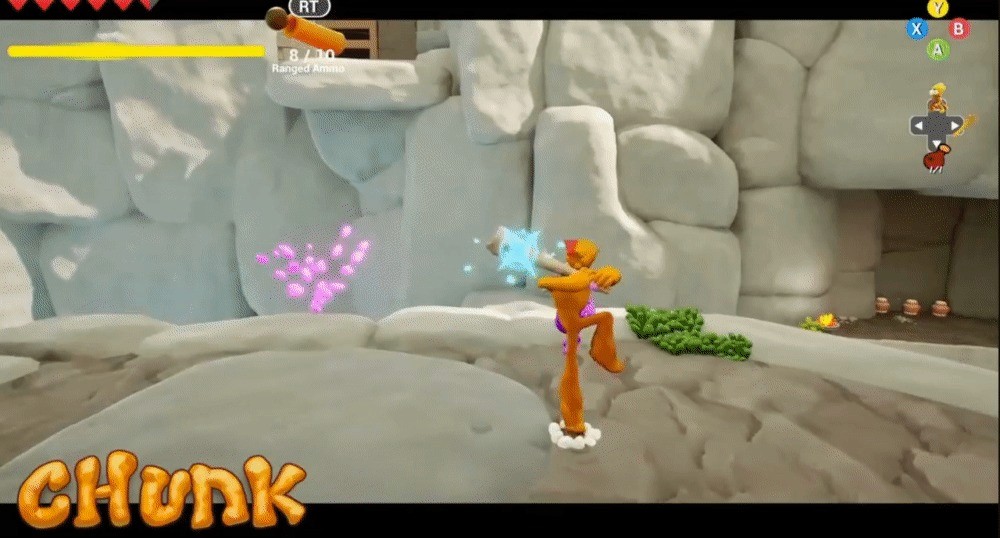 |
Clobbering action being shown off in the latest Chunk prototype showcase |
JOHN:
"Yeah, I think we tried to do a lot of stuff in Bears which didn't really work well in a first person shooter. We're able to do that now with chunk, and so we're looking at introducing features similar to Zelda-like item progressions, dungeons, and everything like that, similar to the 64 era games. Think Wind Waker, meets a bit of Jack and Daxter. We're creating a grand claymation-esque adventure with some platforming and plenty of goofy lightheartedness. It's completely different, but I think it will still have that Broadside flair to it- though we are considering reigning in the stupid a bit."
With their first commercial title just in the rear view for them, this dev team huddles together to continue work onto their next big and wild game, Chunk. The individuals of this studio fully represent everything true which comes from the statement “If you can’t find work, make work”, and their example of a well-executed “triple-B” game leaves us all wondering where do the limits end for those who are dedicated.
The story of their development doesn’t begin with industry experts seeding money from investors, nor did it come from any traditional approach to be expected when shipping a premium game to the market. Their efforts spanned over 6 years, and they had to garner funds and resources from grants, a publisher, but the rest of that initial runway came from nowhere else but hard and uncertain work. They wanted to take apart a game and figure out how to put it back together again. Maybe now with their next project hot in chase, they can begin to build with that much more experience behind their decisions.
If you want to follow up on Broadside games recent work, be sure to wishlist Chunk on Steam, or just pop into their community Discord server!